The word scorched has rich, layered meanings.
Literally, it describes something burned or singed by intense heat, often leaving marks or damage. Metaphorically, scorched can signify emotional pain or trauma, leaving an imprint as deep as any physical burn.
It can also evoke experiences of harsh environments or adversity that “scorch” one’s inner resilience, forcing transformation.
Scorched can also mean leaving quickly, as in “scorching” through a place, suggesting urgency or the need to escape without looking back. In the context of migration, it implies not only the speed of departure but the intensity of the separation: a rush away from danger, disaster, or an inhospitable land.
Scorched can also refer to the land itself: a homeland ravaged by drought, fires, conflict, or environmental collapse. It conveys the sense of a “point of no return,” where home is no longer a viable place to which one can go back to. This loss is deeply transformative; the land, once a source of nourishment, identity and belonging, is now altered beyond recognition.
Scorched can represent the physical and emotional marks left by hardship and displacement. It evokes the feeling of being “burned” by traumatic experiences. It suggests a lasting impact that shapes a person’s journey, resilience, and sense of identity.
It marks. It leaves a mark.
This is how Devora introduced their performance:
One of the first images that came to mind when I thought of a response to “scorched” was an experience for which I had no documentation; instead, I wrote about the absence of documentation related to my 1996 performance s(us)taining.
On the six month anniversary of the fire, the day after the beetroot peeling, I woke up to find that my hands looked and felt like they had been charred in the fire. Totally surprised, I had not been prepared for the oxidation of the beetroot juice on my hands. Every line, crevice and cell was scorched in colour and pulsing raw sensation.This trauma was too real to be a photograph, a documentation or in any way, representable.
The overwhelming experience of seeing and feeling my own flesh charred, as if from the fire itself, was unassimilated. No narrative language, no existing mental scheme was available to me to permit me to incorporate the experience as ordinary narrative memory. I covered my hands, even from myself, for the next several days. This was trauma and traumatic memory without the capacity for social engagement; not addressable to anybody; a solitary activity. Not capable of representation, or being shared, my flesh and heart was speaking and reflecting back to me — for me, alone.
Fast forward to this past week, as I sat with the “Scorched” prompt, I found myself repeatedly thinking of my hands back then. That’s where the inspiration for my response came from.
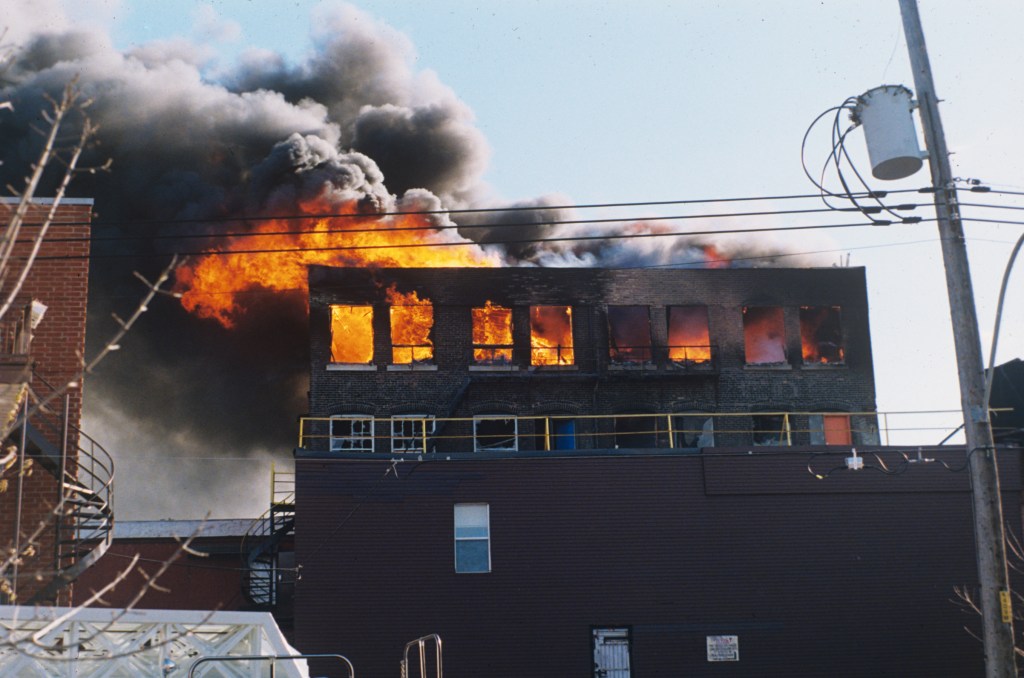
Devora's house burning, photo from s(us)tainingIn s(us)taining (1996), Devora performed an intimate, symbolic ritual on Montreal’s Notre Dame Street, peeling beetroots while barefoot in a white dress to process the trauma of losing their home to arson. This act, inspired by a dream they had of their Russian grandmother’s stained hands during Passover preparations, became a meditation on memory, resilience, and artistic rebirth. Through the presence of their photographer friend Mario Belisle, Devora found validation, witnessing, and a new artistic beginning, grappling with loss and exploring the themes of memory and healing.
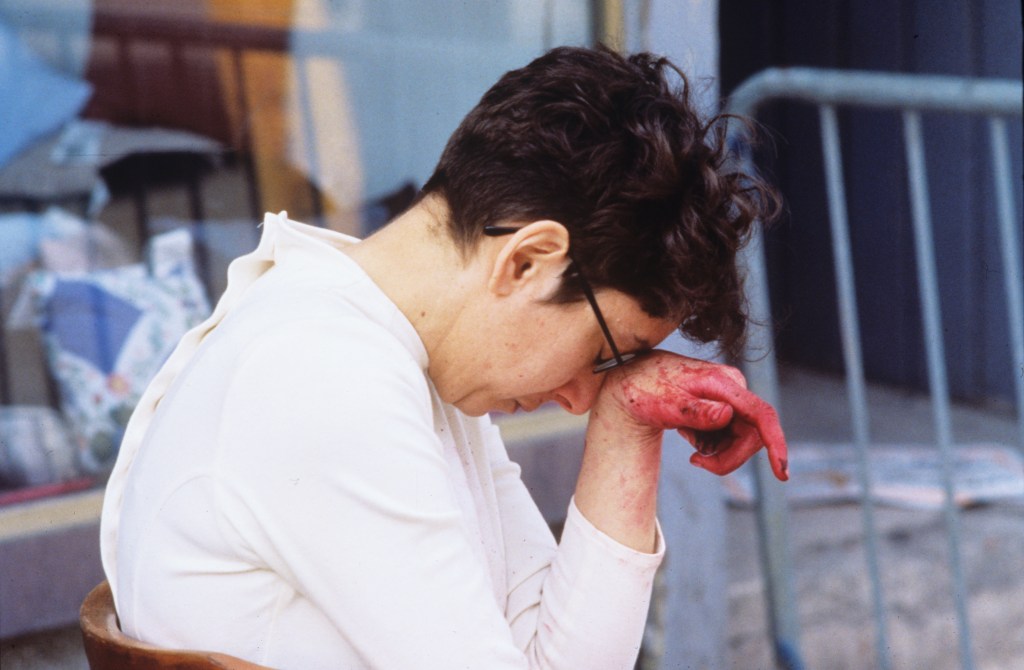
s(us)taining (1996), Photography Credit: Mario BelisleIt is in this context that I was transferred the artifact from the latest performance.
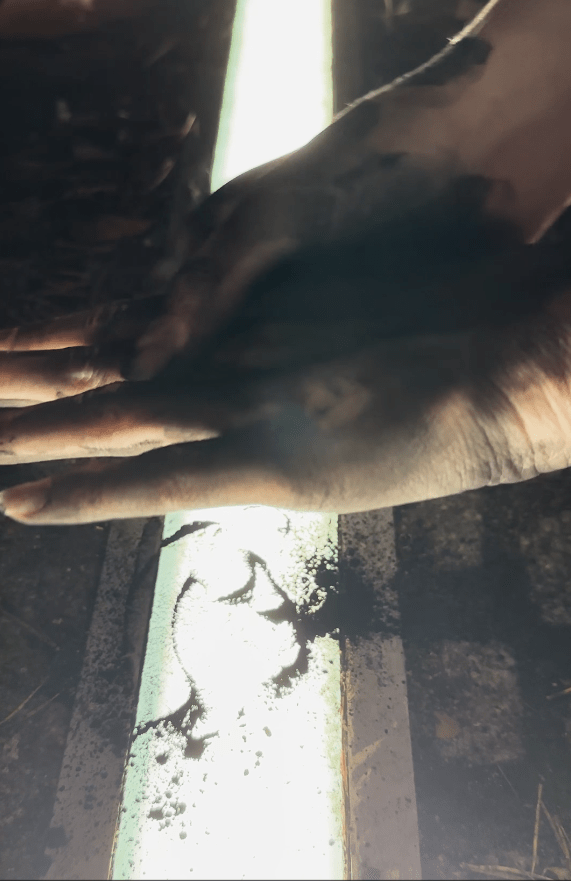
Scorched-video by Devora Neumark with Izadora Reis-edited by Dani HunzikerAt first, I wasn’t sure what I was looking at. I couldn’t tell if it was sunlight was filtering through trees to illuminate hands washing away dirt. Then I realized it was an artificial light embedded in an urban ground. This ambiguity—between natural and man-made, light and darkness—was unsettling.
Also unsettling was the silence.
I could feel the despair in the inability to wash these hands free of ash. Ash has been used across cultures for both physical and spiritual cleansing – serving as an abrasive for washing and as a symbol of transformation and cycles of life, loss, purification and rebirth. The absence of water in this video highlighted the inability to fulfill a basic cleansing need. This lack made the act of washing seem unreachable, intensifying the feeling of helplessness as the physical or symbolic cleansing remained incomplete.
The feeling I had watching this video was similar to what I felt with the last two artifacts. It was as though I were experiencing a musical canon : each piece being a piece of a melody, repeated with slight variations in interpretation, following and building upon one another.
That week, while reflecting on all this, I attended an organ concert. Many in the audience sat with heads bowed, as if in prayer, as the organ’s deep sounds filled the large room, adorned room with intricate woodwork.
I thought of how the organist remains hidden, obscured by the massive instrument. The hidden musician made me think of Devora’s presence in these artifacts: they remain unseen. Even the hands in this video aren’t theirs.
In the last artifact, breath and cries created sound; here, hands move silently.
The organ’s pipes produce music through air, but this is only possible because of the organist’s hands and feet.
The hands in this new video, echo the breath and cries of the previous piece.
Hands breathing. Hands crying.
Did I mention the silence was unsettling?
I felt compelled to fill it, to bridge the emptiness.
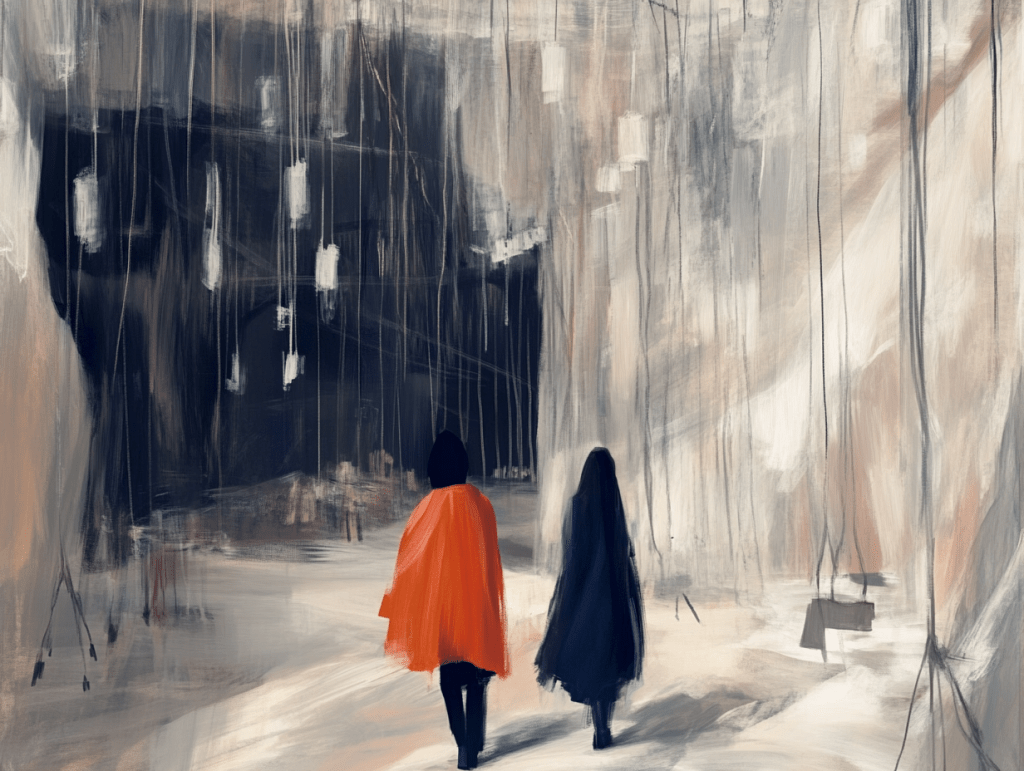
Here is my response.
All I can add is the realization of how difficult it is to hold someone else’s pain.
And how tempting it is to fill the silence.
*This text was crafted in collaboration with ChatGPT-4


 Displacement Codes - Contemplative Performance and the Climate Crisis
Leave a comment