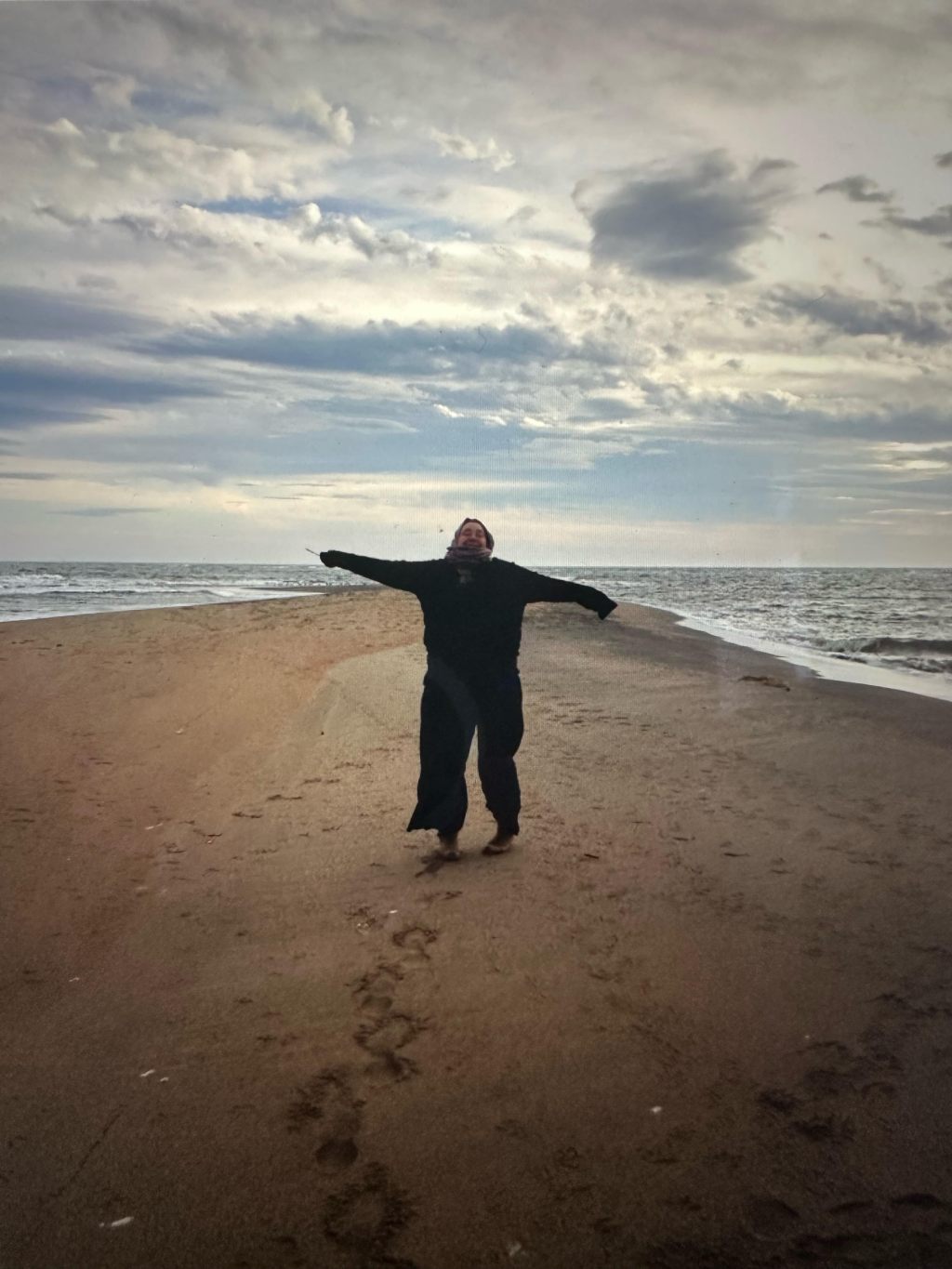
I met Devora on a cold sidewalk in front of the “Citizen and Immigration Canada” building. Nervousness was palpable in the long line up of status seekers checking in with their assigned officers. Rumor had it that you could go in and not come out through the same door – detained or sent “back home” on the next available flight. Even if your real home of many years was only a few metro stops away. I didn’t (and still don’t) practice refugee law. But a friend of a friend I met at a fundraiser for another pro bono file asked me to assist an Indigenous refugee claimant. Devora had been pouring their heart, soul and every resource they had into this particular case.
That day, the words we heard inside the cramped cubicle of that building were far from reassuring. We later regrouped over warm drinks, though the coffee tasted especially bitter. In the years that followed, we would share many more bitter drinks before we could finally indulge in a mountain of sweets at the final celebration.
In the meantime, Devora became a representative for a client. The organization they worked for at the time contracted my firm to develop trainings on Impact and Benefits Agreements for First Nations communities, sharing best practices on how to engage with corporations in the energy and extractive industries. The goal was to ensure that development on their lands aligned with their needs and aspirations. This involved extensive travel together, including long car rides and visits to remote regional airports.

Through sharing stories, meals, cramped spaces, laughs, deadlines, new discoveries and old memories, we became friends.
Devora’s artistic practice has been a constant thread throughout our interactions. During our long drives from Montreal to Gaspésie, they would share stories of the many places they had visited and those they planned to explore as part of their work. At times, the car would feel like a magic capsule. “You know, one place I haven’t been is China,” they once said. The next morning, they excitedly announced that they had been invited to create a project in Hong Kong (Part of the Family).
For my wedding, they gifted me a copy of their work titled Comfort and Care.
When I visited their Montreal home, I was greeted by a living anthology of their work. Some pieces evoked particularly powerful reactions. I would gasp each time I passed one particular painting in their entrance (part of the The Task of Mourning series), and exhale in peace every time I saw the Meditations on Wellness and Beauty (and particularly Meditations in Orange) near their yoga mat. Even the furniture and objects in their house carried stories, often tied to their performances. In Devora’s space, nothing was just a table, a chair, a teapot, or a cover. Every element had significance. They knew each book in their library intimately. There was deep meaning, deliberate reflection around everything.
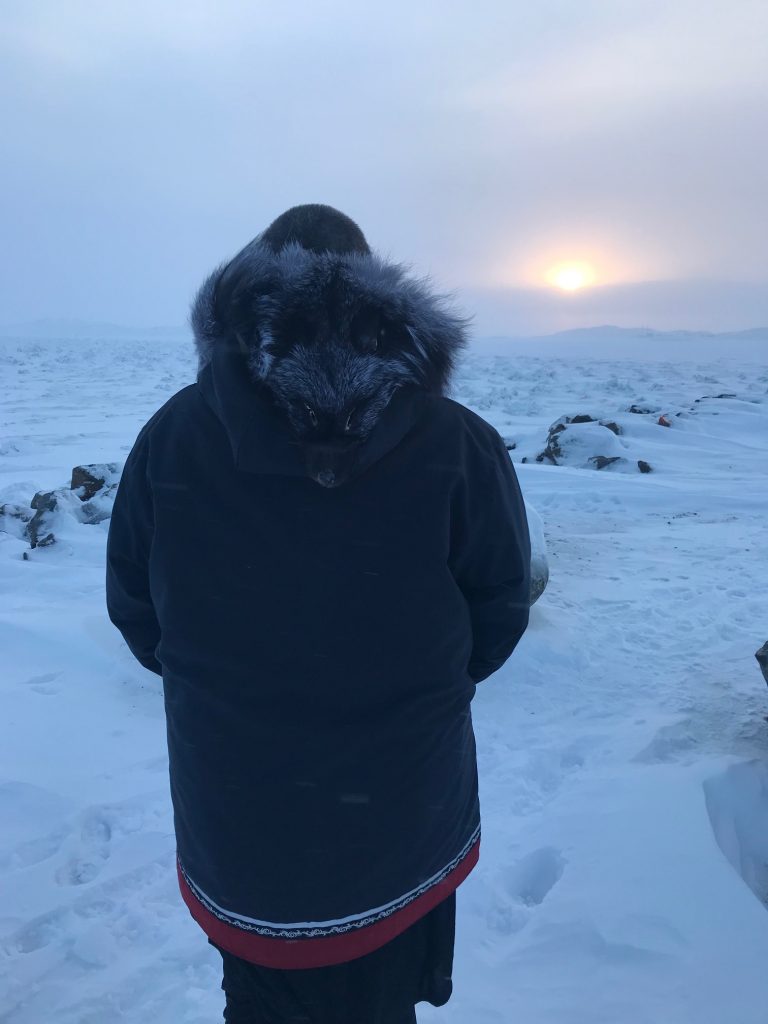
Six years ago, Devora moved to Nunavut and began “working for the government.” As Buffy Sainte-Marie’s song plays in my mind while I write these lines, I can’t help but think how different Devora’s experience is from what the song describes. Keeping “their mouth shut” and remaining someone “nobody know[s]” in the background, have never been among their strengths. Devora also never does just one thing at a time. When they first landed in Iqaluit, they were still a faculty member in the MFA in Interdisciplinary Arts program at Goddard College, where they co-founded the Indigenous and Decolonial Art Concentration. Between learning to sew amautis and surviving in the tundra, they collaborated with high school students on Letters to the Ice, became certified as a Climate Change Adaptation Practitioner by the Yale School of Public Health, delivered multiple conferences and led countless workshops, pursued a Graduate Diploma in Emergency Management, and published in international journals—just to name a few of their “extracurriculars”.
While Devora may be a serial project manager, every commitment they take on is treated with utmost seriousness. They give themselves fully to each endeavor—nothing is ever rushed, and no detail goes unnoticed. Devora takes their time.
This is a stark contrast to my approach. I am fast. I walk fast, talk fast, read fast, and move quickly through different projects. Which means, at times, certain details zoom past me—or perhaps I zoom past them. However, I’m often told I’m “efficient,” and I take pride in the “productivity” that comes with it.
Devora, on the other hand, seems to have a kind of magical antenna, instantly attuned to details that make them stop and notice. For example, they once silenced me in the middle of an inspired tirade because they had spotted an eagle and wanted to fully take in the moment. I was irritated at that second, but the truth is, I don’t remember what I was ranting about. What I do remember is the majesty of that eagle soaring over the Gaspesian landscape.
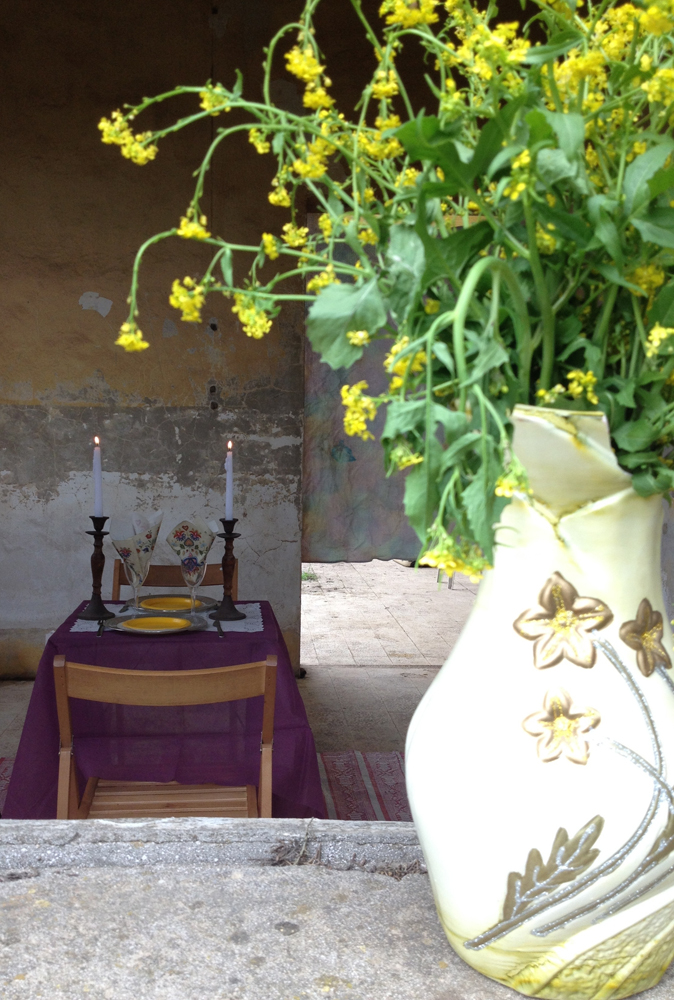
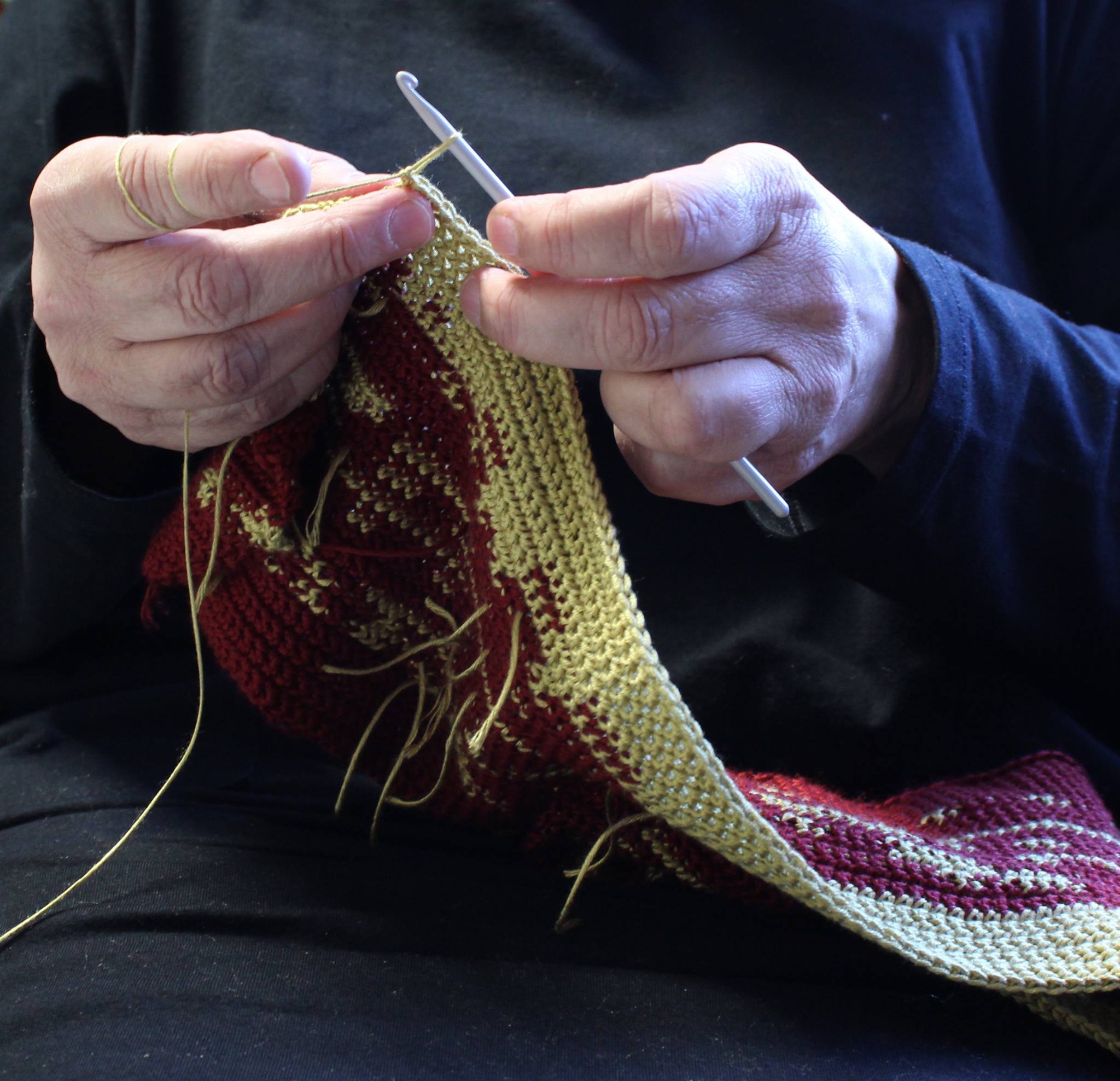
As a lawyer, I like to see the immediate impact of my work. I often ask, “What good does it do?” when efforts don’t seem to lead to any tangible results. I ask these questions about overly long legal documents (if no one understands them, what’s the point?), seemingly pointless meetings (the kind that could’ve been an email), endless litigations, and panels where the speakers only offer vague generalities. I knew Devora wanted to create change as well—that was something we shared. But at first, some of Devora’s performative work didn’t seem, to me, connected to any practical outcomes. What good does it do to peel beetroots in a white dress on a sidewalk? (s(us)taining ) What good does it do to clean an abandoned house no one will step into, knowing it will just get dirty and dusty again? (Mansura Revisited ) What good does it do to crochet something only to unravel it? (presence ) While these performances evoked powerful images and emotions, they felt a bit too removed from actually addressing or solving any urgent issues.

There would be no injunction at the end of this. No funding for a new program, no infrastructure built, no bill passed, or agreement drafted. Nothing tangible.
And yet, Devora knows how to get tangible results. They can draft complex grant proposals, well researched academic papers and elaborate policy frameworks. They can organize and mobilize, resolve and mediate.
How was their performance practice intertwined with their other work? While I could see many areas where Devora and I could collaborate, their performance practice didn’t seem to be one of them.
In recent years, both Devora and I have been deeply engaged in thinking about displacement and the climate crisis, though from different perspectives. I have mainly approached it from the legal and Indigenous rights standpoint. We have had enlightening conversations about Devora’s work on Maslow’s Hierarchy of Needs in the context of refugee shelters. We have also had extensive discussions on the emergence of AI, a topic that has increasingly preoccupied me—initially through the lens of Indigenous perspectives, and more broadly in terms of ethics, governance, and policy.
Thus, when Devora asked me to collaborate on a project addressing climate-induced displacement through the use of prompts while they were in Germany for their Forced Migration and Refugee Studies Fellowship, I was thrilled. Part of my excitement came from assuming “prompts” referred to instructions for AI (more on that in the next article). In fact, I had been actively seeking out more AI projects as I was expanding the AI component of my practice. My enthusiasm quickly overshadowed any usual questions about “what good would it do” to collaborate on a contemplative performance.
It wasn’t until I started writing this first entry that I began to deeply explore the tangible impacts of such work—or the lack thereof. I even questioned whether, on my end, it could be called “work” at all.
When I asked Devora how their performance practice differed from other areas of their work, they highlighted its inherent incongruence. How performance can provoke diverse reactions and interpretations, and in doing so, open up space for dialogue.
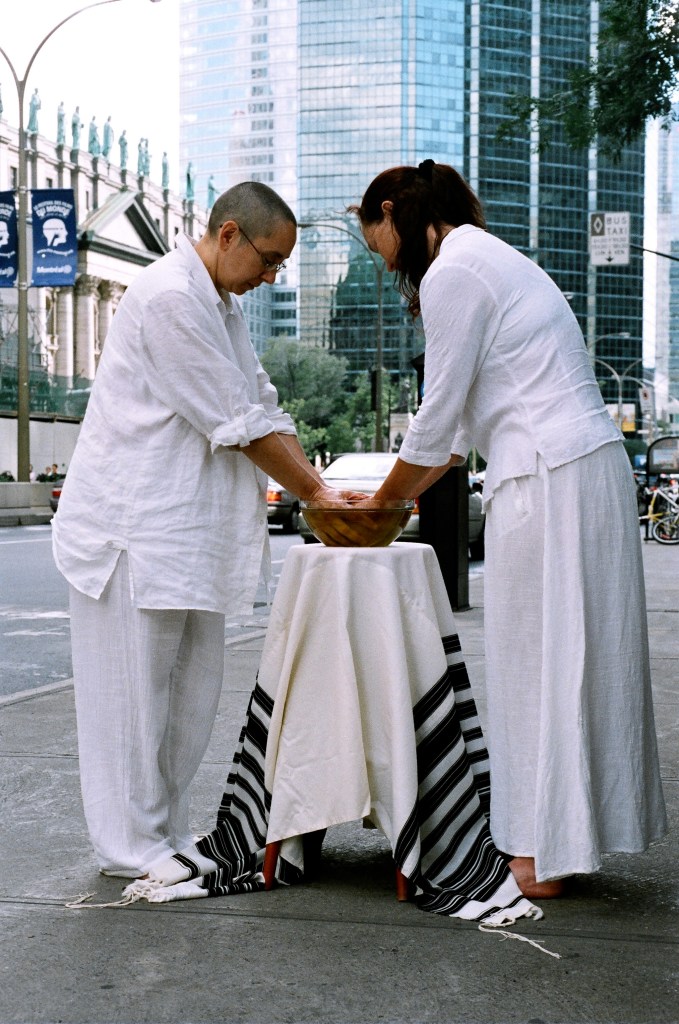
They shared how during their Faire bon ménage performance in Amiens, Basel and Berlin passersby felt comfortable expressing both pro- and anti-migrant sentiments. Some interpreted their sweeping gestures in front of Refugee Registration Centres as welcoming, while others saw them as an act of removal. Similarly, during their And how shall our hands meet performance which focused on building Jewish-Palestinian alliances, a confused onlooker shouted “Whose side are you on?”

Contemplation and performance are not just central to Devora’s work—they are woven into how they live their life. Whether pouring a cup of tea or preparing a lecture, every gesture is imbued with observation, reflection, intention, and meaning. They mentioned their time living in the Arctic has deepened this contemplative approach, shaping how they engage with both life and work.
The text Devora sent me on their first day in Nuremberg, after a quick run to the local store, perfectly captures their way of living in contemplative performance: “I kept seeing tangled root formations and imagined curling up within them, but I couldn’t in those moments today because I was carrying groceries and it was pouring rain…”
This realization leads me to understand the true value of this performance project and its potential impact. While it may not produce immediate, tangible results, it gathers the energy needed to provoke change. It is the reflection before the action, the space where a deeper question is asked—“What does is all mean?”
And this is where (real, tangible) transformation begins.






 Displacement Codes - Contemplative Performance and the Climate Crisis
Leave a reply to What are we talking about, and what does is all mean? – Displacement Codes – Contemplative Performance and the Climate Crisis Cancel reply